
A practical comparison to help you choose the best layout, value, and design for your property.
If you are considering extending your home, you will quickly discover two popular options: a rear extension and a side return extension. Both can transform your ground floor and improve how your home feels day to day, but they work best in different scenarios. The right choice depends on your property type, how you use the space, and what you want to achieve, whether that is a larger kitchen diner, a better connection to the garden, or simply more natural light and improved flow.
This guide explains what each type of extension is, the main advantages and limitations, what usually affects planning, and how to decide which one is likely to deliver the best outcome for your home.
What is a rear extension?
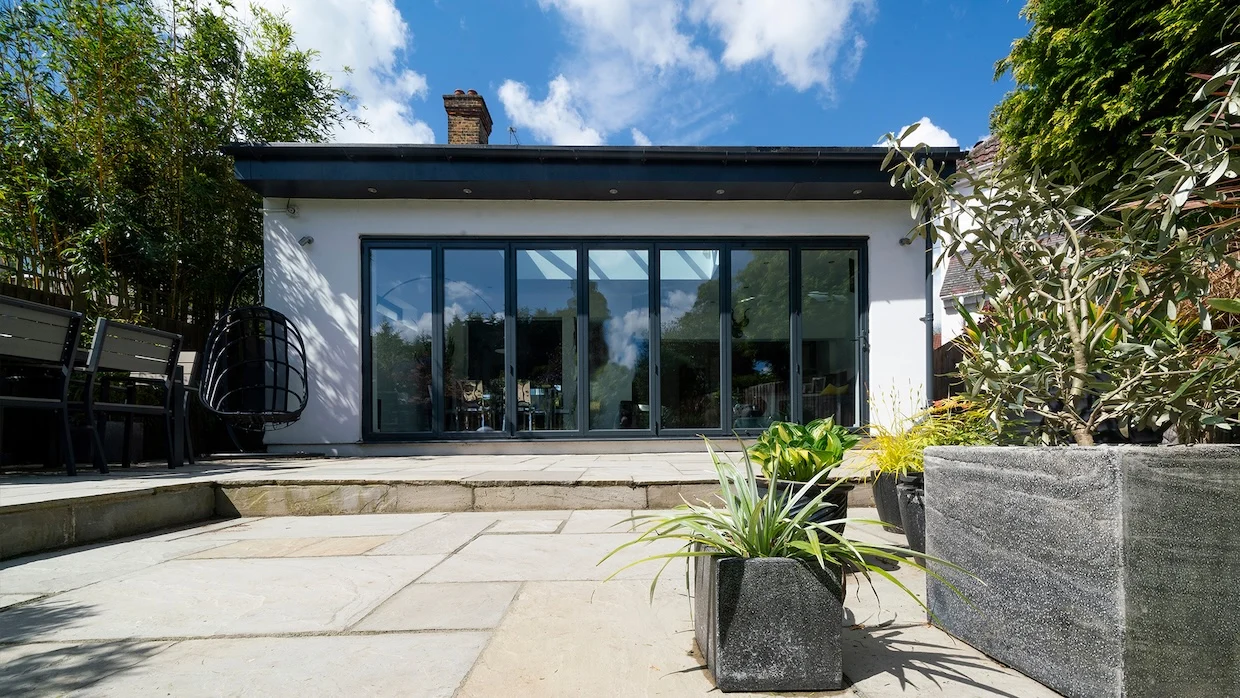
A rear extension extends out from the back of the house into the garden. It is one of the most common choices because it can add a meaningful amount of floor space and create a layout that feels modern and open. Rear extensions are often used to build larger kitchen diners, family rooms, and living spaces that open onto the garden with large glazed doors.
Rear extensions can be designed in a range of styles, from traditional pitched roof additions that match the existing property to contemporary flat roof designs with roof lights and minimal framing. The overall impact can be subtle or dramatic depending on the design, glazing, and internal layout changes.
What is a side return extension?
A side return extension fills in the narrow strip of external space at the side of a house, often found on Victorian and Edwardian terraced or semi detached properties. Many homes have a side passage that is used for bins, storage, or access to the garden. A side return extension takes that underused area and turns it into internal space.
The most common benefit is widening an existing kitchen. Even a relatively modest increase in width can make a kitchen far more functional, allowing for better worktop runs, a larger island, or improved circulation. Side return extensions can also be combined with rear extensions to form a wraparound extension, which can produce a substantial open plan layout.
Key differences at a glance
- Rear extension: usually adds more floor area and can transform the relationship with the garden.
- Side return extension: often adds less area, but can dramatically improve the usability of existing rooms by widening and rebalancing the layout.
- Design impact: rear extensions can create a new room footprint, side returns tend to reshape the existing footprint.
- Best for: rear extensions suit many property types, side returns are especially valuable for older homes with narrow kitchens.
Advantages of a rear extension
1. More space for modern living
Rear extensions often provide the most straightforward way to add space where homeowners need it most, on the ground floor. If your goal is a generous kitchen diner, a family room, or a large open plan space with zones for cooking, dining, and relaxing, a rear extension can deliver that.
2. Strong connection to the garden
Many homeowners want a home that opens onto the garden. Rear extensions make that possible through wider openings, sliding doors, or bi fold systems. With careful design, you can create a space that feels bright and connected, ideal for entertaining and family life.
3. Flexibility of design
Rear extensions can be designed in traditional or contemporary styles. Roof lights, roof lanterns, and feature glazing can bring light deep into the floor plan. A well designed rear extension can also provide a “wow” moment, particularly when combined with a high quality kitchen and thoughtful lighting.
4. Opportunity to improve the whole ground floor layout
Because a rear extension often coincides with reworking the kitchen and adjoining spaces, it can be the catalyst for a full ground floor transformation. That might include improved storage, a utility, a pantry, or a snug area within an open plan layout.
Advantages of a side return extension
1. Transforming a narrow kitchen
Many older homes have long, narrow kitchens that feel cramped. A side return extension can add valuable width, making the room feel balanced and far easier to use. It can also allow for better kitchen layouts, such as a larger L shaped or U shaped arrangement, or an island with improved circulation around it.
2. Keeping more of the garden
Because side returns typically use underused side space, they can preserve more of the garden compared to extending fully out into it. This can be a major advantage where outdoor space is limited, or where you want to keep a larger patio or lawn area.
3. Bringing in natural light
Side returns are often designed with roof glazing, such as a long roof light running along the new roof, or a set of roof lights that bring daylight into the middle of the home. This can make a huge difference, especially in properties where the existing kitchen is darker.
4. A strong option for certain property types
Side return extensions are especially suited to terraced and semi detached homes that have a side passage. If your layout currently wastes that external strip, the return on space and usability can be excellent.
Which option adds more value?
Both extension types can add value, but it depends on how much space is added and how well the new layout works. Rear extensions usually add more total floor area, which often translates into a stronger value uplift. However, side return extensions can still add considerable value because they can fix common layout issues, such as narrow kitchens and poor flow.
In many cases, the highest value comes from the best overall design, rather than simply adding the most square metres. A well planned extension that creates a bright, functional, attractive kitchen diner often has a strong appeal to buyers.
Planning permission and design considerations
Planning outcomes vary by property, location, and design. Some rear and side return extensions can fall under permitted development, but that depends on limits, conditions, and whether your property is subject to restrictions. It is always wise to get professional advice and confirm what applies to your home.
Design wise, there are a few considerations that often influence the final choice.
- Neighbours and privacy: window placement and roof heights can matter, especially near boundaries.
- Drainage and manholes: existing drainage runs can affect cost and feasibility.
- Structural work: open plan designs may require steel beams and reconfiguration of existing walls.
- Light strategy: roof lights, lanterns, and glazed doors influence how the space feels.
How to choose between a rear extension and a side return
Start with how you want to use the space. If your priority is a large open plan kitchen diner with a strong garden connection, a rear extension is often the clearer choice. If your kitchen is narrow and the side passage is wasted space, a side return may deliver a dramatic improvement without taking as much garden.
Here are a few questions that help clarify the best fit.
- Do you need maximum additional area, or do you mainly need a better layout?
- Is your kitchen narrow, and would extra width make it work far better?
- How important is preserving garden space?
- Do you want a modern glazed connection to the garden as the main feature?
- Are you open to combining both into a wraparound extension for the best of both?
A note on wraparound extensions
If you want a significant transformation and your property allows it, a wraparound extension can combine the benefits of both approaches. It can create a large, flexible open plan space, improve flow, and deliver an impressive end result. It can also be more complex and therefore may increase budget, but it is often the option that achieves the most dramatic change.
Next step: If you would like help deciding which extension type suits your home, speak to an experienced builder early. A quick conversation about your goals, the existing layout, and the site constraints can save time, improve the design, and lead to a more accurate budget from the outset.